
Cat Pee Smell In The Crawl Space
What is the cause of the "cat-pee" odor?
There has recently been a huge misinformation movement to confuse both homeowners and professionals alike as to the actual cause of this “cat-pee” smell that seems to develop in about 5% of encapsulated crawl spaces.
We still don’t know exactly why they assume this to be the cause, but some self-identified “experts” have blamed this “cat-pee” smell on everything from reinforced plastic to the poor hygiene of a homeowner's cat. We have seen videos posted online from someone identified as "Nina," explaining that reinforced vapor barrier is “glued” together and that as a result, once the glue gets wet, it falls apart, and then the string in the middle gets wet and smells like cat pee. In 20-plus years of working in the crawl space industry, I have never experienced making contact with any kind of string that smells like cat pee when it gets wet. It appears obvious that this company’s ideas or theories are born from the purest form of ignorance because they clearly lack any knowledge of the causes of the odor, and yet, they continue to claim to be “experts” nonetheless. Although these “experts” do have some “kung fu” plastic that they bought from a home improvement store that, of course, doesn’t contain any “cat-pee” scented reinforcement that they would like to sell to customers.
The TRUE Cause
As our videos state, we have identified that the odor originates from the decomposition of plant material in the ground under the home. In addition, we have also discovered that elevated moisture levels in the ground, post-encapsulation, play a part in the complaint of a “cat-pee” odor as well. We have continued to collect data on any conditions that may contribute to the development of the odor but have not been able to draw any conclusions...until now.
I don’t want to repeat the information that we have already posted, but the info can be found here — Crawl Space Odor
Cat urine typically smells of ammonia, as it often contains this compound. The scent commonly referred to as a "cat pee smell" is almost universally recognizable, with ammonia (NH₃, a compound of nitrogen and hydrogen) being the source of this distinct odor. In the natural world, ammonia (and ammonium, NH₄) is a key part of the nitrogen cycle; for example, soil bacteria break down decaying plants into minerals that new plants can utilize.
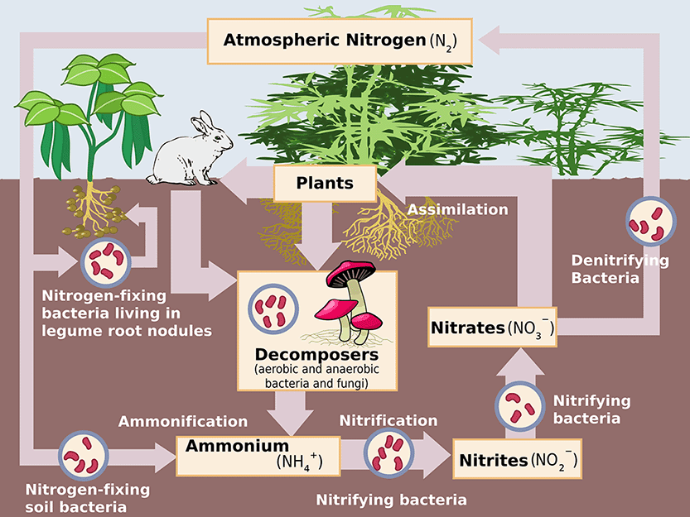
The key difference between ammonia and ammonium is soil pH. Ammonia, which has the characteristic cat-pee odor and is more toxic, is supported by higher soil pH levels. Conversely, lower soil pH levels favor the less toxic ammonium.
Chemically, ammonia is composed of one nitrogen atom and three hydrogen atoms (NH₃), while ammonium contains one nitrogen atom and four hydrogen atoms (NH₄). This YouTube video offers an excellent explanation of the relationship between ammonia and ammonium:
As the video illustrates, shifting the balance between the more toxic, odor-causing ammonia and the less toxic ammonium is achieved by adjusting the pH level.
How to Prevent the Cat Pee Smell
To prevent the unpleasant cat pee odor from developing in your new encapsulated crawl space, you have two options:
- Test and pH balance the soil as necessary before encapsulation.
- Install a soil gas mitigation system to remove the ammonia (the cat pee smell) from the crawl space once it appears.
The pH scale ranges from 0 to 14, with 7 being neutral. Ammonia registers at about 11 on this scale. The primary goal is to adjust your soil's pH as close to 7 as possible to prevent or eliminate the cat pee smell.
It is important to note that this cat pee odor is not caused by polyester string or any of our products. While a high level of ammonia in the soil can penetrate polyethylene, making the plastic liner smell as strongly as the crawl space, the plastic itself is not the source of the ammonia.

To install this Web App in your ISO device press and then Add to Home Screen.