
Crawl Space Moisture:
An Email From A Customer
Customer Crawl Space Repair® Questions and Concerns
Customer Question
Hi,
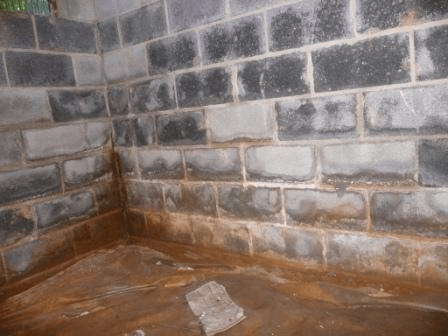
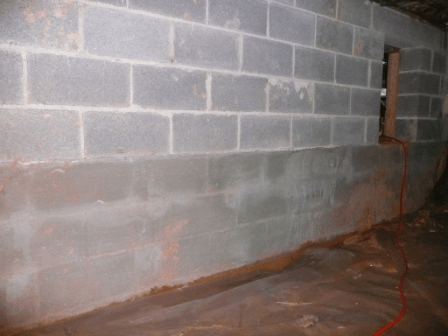
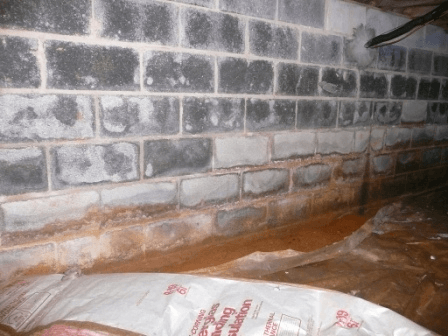
My crawl space is moist, i.e., the air is damp and the foundation walls show signs of wetness. A mold inspector has not found mold, and the subfloor is dry. I am planning to dry out the crawl space, and I have a few questions regarding your product and the various approaches that I’ve read about:
1. I’ve come to your site via "Ask the Builder," where you or one of your colleagues pointed to the crawl space vapor barrier product. (Very nice site, btw.) In the article, Tim Carter (author of the “Ask the Builder” column) referred to high-performance polyethylene. Can you tell me what the advantage of the crawl space vapor barrier is over the high-performance polyethylene? I’m not planning to use the crawl space for storage.
2. Based on what I read, the best practice indicates that one should close the crawl space vents and seal the crawl space. But given that moisture will still be underneath the vapor barrier, will this not lead to wet foundation walls and wet studs underneath the vapor barrier?
3. I’ve read about two alternative approaches to dry out the crawl space:
a) Use a crawl space dehumidifier
b) open up an HVAC duct and an air return to dry and warm the crawl space through conditioned air.
– Is option (b) the cheaper solution that is recommended for less moist crawl spaces? Is option (a) recommended for severe cases? We live in Maryland (west of DC), so it gets humid in the summer, but it’s not as wet as on the Eastern Shore.
– Does option (b) require insulation of the foundation walls, while option
(a) does not?
Any help would be greatly appreciated.
Many thanks,
— Anonymous Customer
Our Answer
Thanks for the email!
1. The big difference in vapor barriers is whether it is made of virgin polyethylene resin and if it has a polyester reinforcement, which all of ours do. Our vapor barriers are considered high-performance. I believe the confusion is in the lingo.
2. It is true that moisture will be trapped under the vapor barrier; that is what we want. Currently the moisture is not trapped, so it is allowed into the crawl space. The moisture against the foundation walls will not damage the concrete. Think of it this way: the outside of the block is (most of the time) under grade and exposed to a much harsher environment. If you have wood studs in the crawl space, they should never be under the barrier. All wood, including the sill plate, should be left exposed to the crawl space.
3. I am assuming you are asking about after the crawl space is sealed up. I personally see a greater advantage in adding the conditioned air to the crawl space over a dehumidifier, provided you live in the home year round.
If this is a vacation home, then a dehumidifier is probably better suited to care for the crawl space when you are gone. Of the two, the cost-effective option is the conditioned air. Professionally, it is my opinion that you will need to add a mechanical means of air flow in the crawl space once you close the vents. However, personally I recommend sealing the crawl space and then monitoring the humidity and temperature before making a final decision on what is best for your home concerning airflow in the crawl space.
There are remote hydrometers you can purchase to collect this information without getting into the crawl space every day. The subject of crawl space insulation can be quite complicated, and in my opinion, it will take a conversation between both of us in order for me to best guide you. As a set answer, I would direct you to your local building code or energy code for guidance. I say this because without all the information, I do not want to steer you in the wrong direction.
I hope this helps!
— Matt CrawlSpaceRepair.com, LLC
To install this Web App in your ISO device press and then Add to Home Screen.