
Selecting a Crawl Space Vapor Barrier
When selecting a vapor barrier for your crawl space, it is crucial to understand the makeup and manufacturing process of the product you are choosing.
Today's market offers a variety of choices, including cord-reinforced and coated woven liners, alongside traditional non-reinforced sheeting.
In this article, we will examine the critical differences in product makeup, material quality, tear strength, and expected service life.
Because we want to remain focused on vapor barriers, we will not be covering products like tarps, used advertising banners, or gimmick liners. We will be discussing only brand new, first-use products that were manufactured for the purpose of crawl space encapsulation.
Cord Reinforced
First up is probably the most well-known and recognized option: cord-reinforced crawl space vapor barriers. This product, like so many others, certainly has knockoffs floating around the market. The substandard, knockoff vapor barriers are typically very cheap compared to most other options—so much so that the suppliers refuse to take close-up photos of the product or offer samples to promote the quality. If you are considering spending $200 or more on a product for your crawl space, you should certainly be offered a sample of the product to inspect the quality before approving the purchase.
Lamination
Cord-reinforced liners are made by laminating two different films together with a polyester cord in-between the film. Quality vapor barriers avoid the use of chemical adhesives or glues during the lamination process. Because polyethylene is naturally resistant to bonding agents, glued products often fail quickly and release bad-smelling odors from off-gassing. High-quality liners utilize hot-melted, virgin polyethylene as a tie layer to create a permanent bond between the layers.
Reinforcement
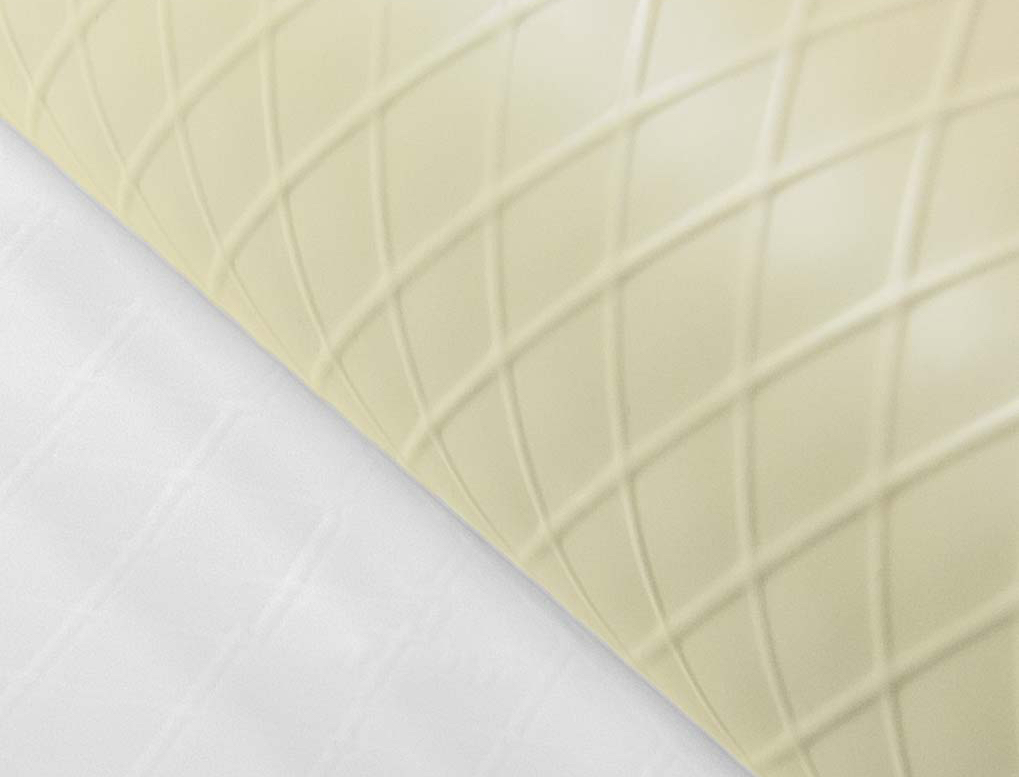
Constructed from polyester, the 1000-denier-rated cord provides essential tear resistance across both directions. This specific 1000-denier rating is also often used in bias-ply tires to maintain structural strength during highway travel. Typically, these cords are arranged in a square or diamond configuration, spaced approximately 3/8" to 1/2" apart.
Smell
Because imported and other low-quality cord/string-reinforced products have entered the market, there have been many complaints about an odor coming from this type of vapor barrier. It is very important to make sure that, regardless of which vapor barrier is used in your crawl space, it has been Tested Pure™ certified to ensure that there will not be odors coming from the plastic vapor barrier. At CrawlSpaceRepair.com each and every brand is Tested Pure™ certified and each roll comes with a certificate verifying its testing when the products are registered for the 30-year warranty.
Coated Woven Vapor Barrier
Woven products (also known as "coated woven") have been on the market since 2012 but have made a bigger run at the market share since 2019. This product, in its most available form, is made by coating a tarp-like weave with a 1-mil polyethylene layer on the top and bottom. This vapor barrier gained its early popularity primarily from being less expensive than the cord-reinforced vapor barrier. But unfortunately, as its demand began to rise, so did the price.
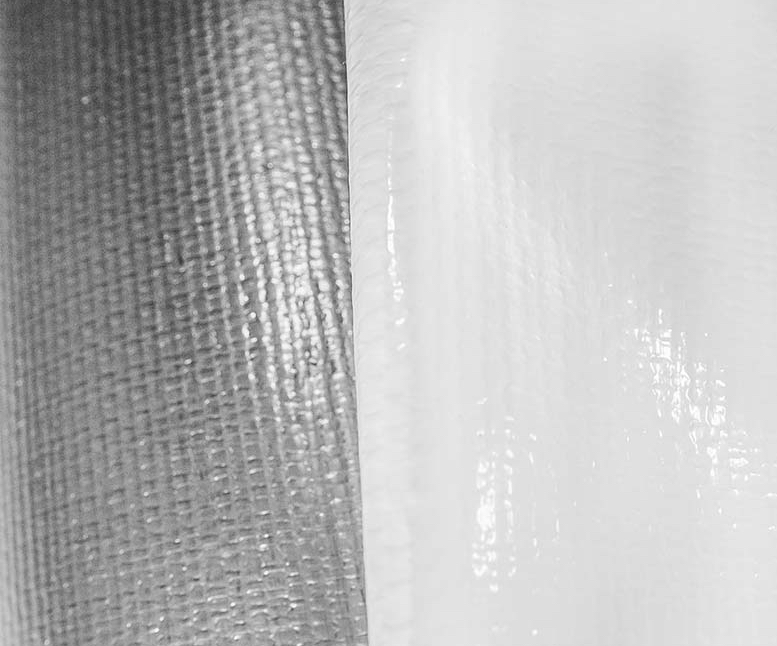
The most advanced versions of the coated woven are the SilverBack® HS (High Strength™) and GuardianLiner® HS brands. These two brands are advanced in that they use a 4 mil film on the white side, with a 1 mil tie layer instead of just a 1 mil coating. This 4 mil film greatly increases the wear layer of the product, thus improving the wear and tear of crawling on it in a crawl space.
Reinforcement
The reinforcement of this vapor barrier is made from cross-weaving polyethylene ribbons. The ribbons in the SilverBack® and GuardianLiner® vapor barrier are stretched to strengthen them before they are weaved together. This method of weaving greatly improves the tear resistance from both directions.
Smell
Just as with cord-reinforced vapor barriers, the best way to avoid having an odor problem is to make sure you are buying a Tested Pure™ certified vapor barrier. Using cheap, imported products meant to be used outside often results in an odor problem in your home. Both the SilverBack® and GuardianLiner® are Tested Pure™ certified vapor barriers.
Non-Reinforced Vapor Barrier
Non-reinforced plastic sheeting has basically been around since plastic was invented. There are many quality differences from one roll plastic to the next. Many products in this category are only meant to have a short shelf life, such as a paint drop cloth or dust cover. These products are usually made of 70%-90% recycled polyethylene and offer no long-term protection for an extended service life. In fact, they are actually manufactured to break down easily in a landfill once they have served their purpose.
The Difference
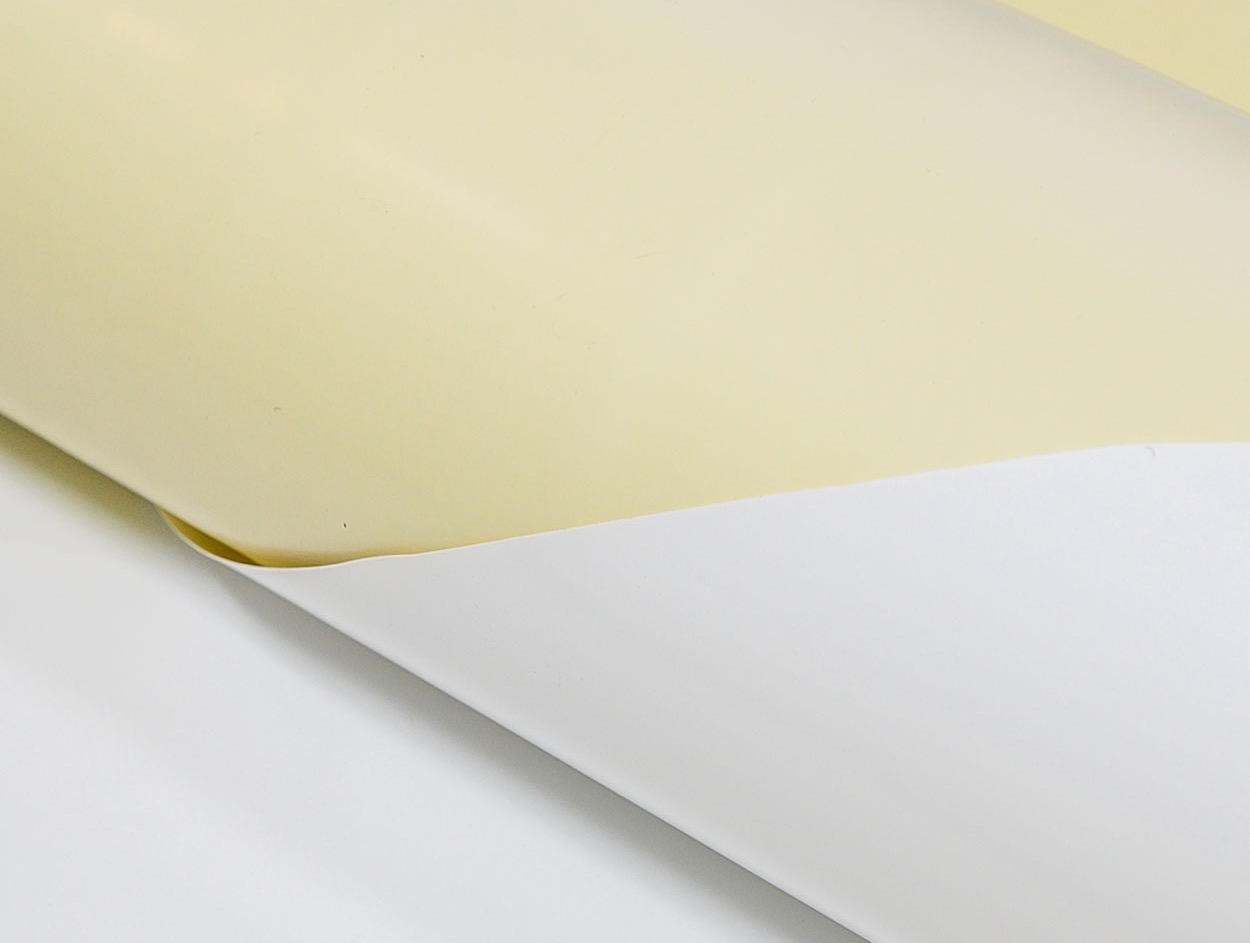
Use of a non-reinforced vapor barrier in a crawl space will work very well, provided it is comprised of a 100% virgin polyethylene film and that it is Tested Pure™. However, it is recommended that installers use at least an actual 10 mil on the floors in a low-traffic crawl space. The walls can be as thin as 6 mil, though unfortunately there are very few high-quality 6 mil vapor barriers on the market. Many people use 10 Mil Pure Guardian® on the floors and 8 Mil Pure Guardian® on the walls.
Thickness
The most frequently asked question about crawl space vapor barrier selection is "What thickness do I need?" The best thickness to use all depends on the amount of traffic in the crawl space.
If the crawl space does not have a water heater, air handler, ductwork, plumbing, or any other reason for people to enter the crawl space, then a thinner mil vapor barrier like the 10 mil Pure Guardian® would be perfectly fine. However, if a crawl space has all of those items, a water heater, air handler, ductwork, and plumbing, then a more highly durable vapor barrier like the 20 mil SilverBack® or 20 Mil GuardianLiner® would be more highly recommended. If the crawl space only has one or two of those utility items and will be entered from time to time but won't be entered very frequently, then the 12 mil GuardianLiner® or 12 mil DiamondBack™ will work just fine!
The bottom line is, selecting the right crawl space vapor barrier requires balancing product makeup with your specific needs. Whether choosing cord-reinforced, coated woven, or non-reinforced liners, the most critical factor is ensuring that the material is Tested Pure™ certified to prevent unpleasant off-gassing odors. The ideal thickness should be dictated by expected traffic: a 10 mil liner like Pure Guardian® is suitable for low-traffic crawl spaces, while a heavy-duty 20 mil SilverBack® or GuardianLiner® is recommended for high-traffic crawl spaces containing various utility systems. Lastly, remember that investing in a high-quality, durable barrier ensures a healthier home environment and a long-lasting service life!

To install this Web App in your ISO device press and then Add to Home Screen.